DIGGING / PROJECTS


DIGGING / PROJECTS
PACHACAMAC, PERU
MERIMDE BENI SALAMA, EGYPT
PACHACAMAC, PERU

Pachacamac is one of the most important sites in the Americas.
Dating back to the early first millennium AD, Pachacamac rose to prominence when it became an oracular site and pilgrims travelled there from all over the Andean area to receive benedictions and healing. Four distinct cultures have been defined at the site, of which the Ychsma polity is the main focus of the aptly named Ychsma Project, based at the Free University of Brussels.
I am currently analysing the remains of over 100 individuals buried in a mass grave around a thousand years ago, and which we excavated in 2012. Although, with maybe 80,000 burials at the site, there are many more to come.
Pachacamac Publications:
Latin American Studies: Moche Pachacamac
Peru: Pachacamac - World Archaeology
Pachacamac: A hidden world reveals its secrets
QUESNA, EGYPT
MERIMDE BENI SALAMA, EGYPT
PACHACAMAC, PERU
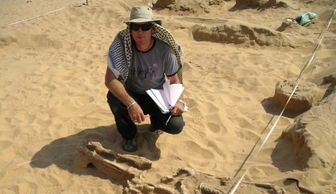
The site of Quesna is in the Minufiyeh area, to the North of Cairo, in the Egyptian Delta. The Delta was the breadbasket of Egypt, flooded annually by the Nile and inhabited for over 100,000 years. This particular site is known primarily for the large number of Hellenistic and Roman interments to be found there, along with a series of mausolea, tomb structures and a falcon gallery, which contains thousands of mummified falcons. The project is run by the EES and has been used to foster links with the Egyptian academic community through training schools for local inspectors and students. The site - rather unexpectedly - also yielded the remains of a mastaba tomb dating to the 3rd-4th dynasty (around 2600-2700 BC). While extensively looted, this very rare find contained a tiny ceramic seal fragment bearing the name of the pharaoh Khaba, a rather shadowy figure from the very earliest period of Egyptian history.
Quesna Links:
MERIMDE BENI SALAMA, EGYPT
MERIMDE BENI SALAMA, EGYPT
NTSHEKANE, TUGELA BASIN, NATAL, SA

This is an extremely early and important site in the Egyptian Delta, dating to before anything 'typically' Egyptian (pyramids, hieroglyphs and the like) appeared in the archaeological record. The Predynastic (roughly equivalent to the Neolithic period elsewhere) is characterised by small villages with increasingly complex links between them, and then further afield, as societies become increasingly settled and more reliant upon agricultural produce rather than foraging.
The site was excavated before and into WW2 by a German team, and again forty years later. The EES-backed project is carrying out survey, preservation and some excavation work, and has come up with a range of remains including burials, which are the focus of my study.
Merimde Links:
NTSHEKANE, TUGELA BASIN, NATAL, SA
NTSHEKANE, TUGELA BASIN, NATAL, SA

Early Iron Age Site in the Tugela Basin,
South Africa
This is an Iron Age site in the Natal area of South Africa. The area was extensively used for cattle herding, with kraals (farmsteads) and associated architecture that is very difficult to spot to the unpracticed eye. The site was previously excavated some forty years ago and is now being re-dug by Dr Gavin Whitelaw and colleagues, of the museum of KwaZulu-Natal .
I took several UK students to South Africa in 2017, and worked on the excavation and analysis of human remains found at the site. These offer a particularly rare and very interesting insight into the lives of Iron Age populations of South Africa, and their trade links to surprisingly distant places.
Links:
SPANISH CIVIL WAR EXHUMATIONS, GUADALAJARA, SPAIN
SPANISH CIVIL WAR EXHUMATIONS, GUADALAJARA, SPAIN
The exhumation of Timoteo Mendieta Alcala, murdered by fascist thugs in 1939, along with 24 other people who were hauled from their homes, imprisoned, beaten up and shot, and dumped in a mass grave. The Spanish government has done all it can to prevent their exhumation, under the impression that the ‘pact of forgetting’ - invented in the 1970s after Franco died - is a better idea. We had to go to Argentina to get the permission in a higher, more humane court. I went along with some of my students to exhume the bodies during the Summer of 2017.
Links:
Guadalajara: Ascension Mendieta
WHAT IS THE ASSOCIATION FOR THE RECOVERY OF HISTORICAL MEMORY (ARMH)


